
Why Damp Attic Air Can Turn Into Mold Fast
Moisture leads to attic mold growth when warm, damp air gets trapped in the attic and stays there long enough for mold to spread. This often happens after roof leaks, poor venting, bathroom fan leaks, or weak insulation. Once wood and other attic materials stay wet, mold can grow fast. In homes around Calgary, AB, this problem can start small and become a bigger cleanup job if the source of the moisture is not fixed.
Quick Diagnosis Summary
Attic mold usually means water or humid air is getting into the attic and not drying out. Mold does not need a major flood to grow. It only needs the right mix of moisture, organic material, and still air. Wood framing, roof decking, boxes, and dust can all feed mold. attic mold removal helps deal with the visible mold, but the deeper issue is stopping the moisture that caused it in the first place.
Common Symptoms
Many homeowners do not go into the attic often, so early signs are easy to miss. You may notice a musty smell, dark spots on wood, damp insulation, or rusty nails sticking through the roof deck. In some homes, mold in the attic also links to ceiling stains or peeling paint near the top floor. If the attic air feels hot and sticky, that can also point to a moisture problem.
- Black, green, or white spots on wood
- Wet or packed-down insulation
- Condensation on nails or metal parts
- Musty odors in upper rooms
- Roof sheathing that looks stained or warped

Likely Causes
The most common cause is humid indoor air moving up into the attic. This can happen through gaps around lights, pipes, and attic hatches. Another common cause is a bathroom fan that vents into the attic instead of outside. Roof leaks also add water directly to attic surfaces. Poor soffit or ridge venting can trap damp air, which slows drying. In winter, warm indoor air can hit cold attic surfaces and turn into condensation. In summer, outside humidity can also build up if the attic does not breathe well.
If your home has had past water damage restoration work, it is smart to check whether all hidden moisture sources were fully fixed. Leftover damp materials can keep feeding mold even after surface drying.
What to Check First
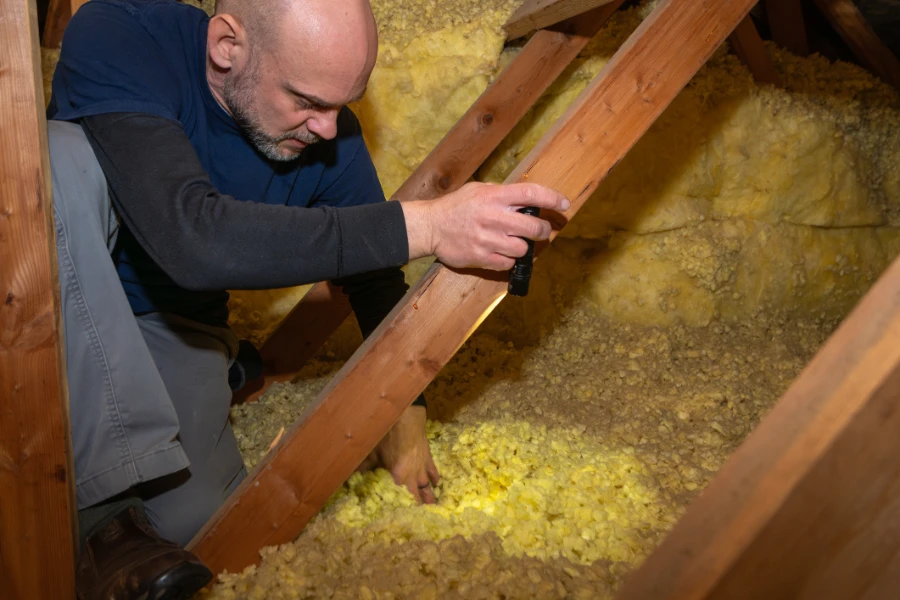
Start with the easiest things to spot. Look for signs of roof leaks around vents, flashing, and valleys. Check insulation for damp spots. See where bathroom and dryer vents go. They should vent outside, not into the attic. Look at the attic hatch for air leaks. Also inspect vent openings to see if they are blocked by insulation or debris.
- Check for active roof leaks after rain.
- Inspect the roof deck for dark staining.
- Confirm bathroom fans vent outdoors.
- Look for blocked soffit or ridge vents.
- Check insulation for wet areas.
- Find gaps where indoor air can rise into the attic.
Safe Fixes Vs Pro-Level Fixes
Some small fixes are safe for homeowners. You may be able to seal attic air leaks, add weatherstripping to the hatch, or replace a short vent duct that came loose. Improving airflow and replacing wet insulation may also help in mild cases. Still, mold can spread farther than it looks, and disturbing it without proper care can make the problem worse.
Large mold areas, repeat moisture issues, and hidden growth inside materials usually need professional help. attic mold removal may involve containment, cleaning, safe disposal of damaged materials, and steps to lower the chance of mold coming back. If the attic has widespread staining or strong odors, expert testing and remediation can save time and lower risk.
Prevention Tips
The best way to stop attic mold is to keep the attic dry all year. That means controlling both water leaks and indoor humidity. Good attic airflow matters, but airflow alone will not solve every issue if warm house air is leaking upward.
- Seal gaps around pipes, wires, and light fixtures
- Vent bathroom fans to the outdoors
- Fix roof leaks right away
- Replace wet insulation
- Keep soffit and ridge vents open and clear
- Check the attic after heavy storms and cold snaps
- Watch indoor humidity levels during winter and summer
Final Recommendation
If you see signs of mold, act early. Small patches can turn into larger damage when moisture keeps returning. attic mold removal works best when paired with a full check of the roof, insulation, venting, and indoor air leaks. Homes in Calgary, AB can face changing weather that adds stress to attic spaces, so routine inspections can help catch trouble before cleanup becomes more involved.
Get Help for the Next Step
If your attic shows signs of mold or damp wood, we can help inspect the problem and explain the next step clearly. Our team handles attic mold removal and helps track down the moisture source so the issue is less likely to return. Call us at (587) 742-3422 to talk through what you are seeing. At Bow-man Services Ltd, we aim to make the process simple and useful. We proudly help homeowners across Calgary, AB with honest guidance and practical service.